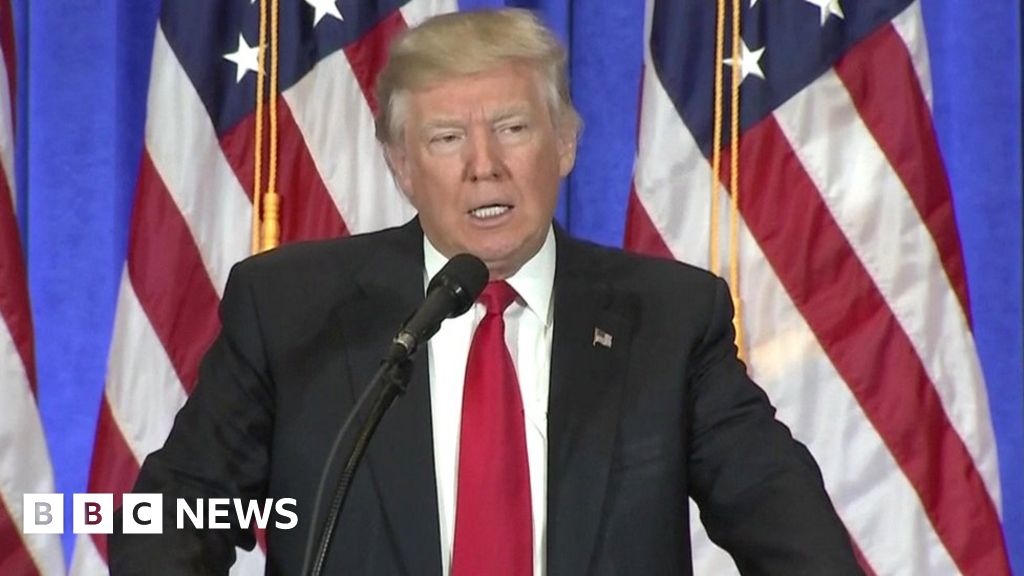
Of an excuse to give the BBC a free pass.
This should be a wake up call to all of us who seek the actual truth.
I’ve long excused the BBC’s mistakes, long supported them on the basis that if both sides claim bias, then they must be doing something right. I’ve even excused their behaviour by telling myself they have to compete for clicks, so of course they sensationalise. I still believe the World Service is the last bastion of real journalism – but how long can it survive?
There comes a point where we, as ordinary news consumers, have to sit back and say, “I no longer trust you,” and I think for me I have reached that point I’ve been sceptical of mainstream media for years, but when it came to programmes like Panorama, I trusted their credentials. This has destroyed the faith that I had left in the BBC.
This was not an editing error; this was not sensationalism for clicks; it was a deliberate attempt, before another country’s election, to misrepresent a person. It doesn’t matter whether you are pro trump or anti trump, that is not the question… whether you can believe anything you see on what was once the gold standard for news is.
More importantly… how many of the opinions you hold today were shaped by a media you no longer trust?
That’s a scary-as-hell thought, because it might actually be true.
If you’re defending the BBC purely because you dislike Trump, then something deeper is going on. That’s not reason; that’s a reflex.
There’s no argument I could give that would matter to you, because for you at least, this isn’t about facts anymore.
If that’s where you are, stop reading. There will be nothing here for you.
That so many are defending this on the basis that, “it’s Trump, so it doesn’t matter” shows how far we’ve fallen. What you’re really saying is, “It’s okay to lie to me as long as I agree with the lie.”
The danger you don’t see is this: if they can lie about the people you dislike, how do you know they haven’t been lying about the ones you support?
The BBC’s mission is clear:
“To provide impartial news and information to help people understand and engage with the world around them.”
It is literally number one on the charter on the BBC website. I would argue that it is perhaps the most defining element of what the BBC is meant to be.
For decades, people have rightly seen the BBC as the gold standard for journalism. Older generations often trust it implicitly, which in itself is a problem as many don’t realise that the footage they’re shown in a documentary or news segment may be edited or presented out of sequence. They see it as if it were a live feed and therefore the truth.
The BBC is funded by us, the public, through the licence fee. This was meant to protect its independence; however, it may be that it is its very independence that has allowed a series of individuals to control its agenda. One way or another, that independence and promise of impartiality has been lost.
With the arrival of the internet, smartphones and online competition, the traditional media lost its monopoly. Its response was to shift from bland truth to chasing a market share. Instead of simply reporting what had happened, they began playing to the narratives. By not telling the whole truth but edited highlights, they sensationalise and move narratives out of their context to paint a picture more entertaining. This often leads to a misrepresentation of what the actual story was about.
This ranges from financial comments where the UK was reported to have the slowest growth of the G7 countries in a quarter in an IMF report but failing to mention that in the same report the UK was expected to have the second or third highest growth over 5 years. A documentary on Gaza, where they failed to disclose that the 13year old narrator was the son of a Hamas official. These are a couple of examples, but there has been a steady framing of narratives, such as using the words “pregnant person” or the coverage of the Gaza hospital that was attributed to Israel but later looked more likely to be a misfired rocket from Gaza itself. These mistakes happen in news reports when things are fluid, but they seem to be happening a lot more often.
None of these are big issues but they do reflect a pattern, and once you start editing the truth for attention or an agenda, you stop telling the truth.
So why does this scandal matter? It’s not because it’s about Trump or the riots on the 6th of January. What or who it is about is irrelevant to the problem that has been exposed. This isn’t just the rushed story from an under pressure news room, not fully checked, or an attempt to compete on sensationalised headlines. This was the BBC’s flagship investigative journalism programme.
Michael Prescott’s internal memo, shows several issues with the documentary, and crucially these were editorial decisions, not mistakes.
Prescott states the Panorama programme “seemed to be taking a distinctly anti-Trump stance.”
He alleges the documentary spliced two separate excerpts of President Donald Trump’s 6 January 2021 speech, one where he says, “We’re going to walk down to the Capitol” and another about “we fight like hell”, making them appear as one continuous exhortation
The memo claims that the footage of the rally or groups such as the Proud Boys was shown in a misleading sequence.
He argues this edit “created the impression that Trump said something he did not … materially misled viewers.”
All of this adds up to a decision to change the narrative to suit the outcome the programme creators wanted, not a mistake. This, coupled with its airing a week before the election, is just one poor decision after another. It was not an attempt to create a factual view of the situation, quite the opposite. This should be a concern for us all because, while looking into this, it appears it’s not the first time Panorama has fallen short in its journalistic integrity.
From Princess Diana to dubious practices in reporting on the police, Panorama has repeatedly damaged its own reputation and with it, the integrity of the BBC. Coupled with the steady stream of errors from the BBC’s main news outlets, this has created a genuine crisis of faith.
Calls to defund or scrap the BBC are growing louder. I don’t agree with them, but I can no longer deny that the BBC itself has done more than anyone to fuel those calls.
The last bastion of real journalistic integrity is the BBC World Service, still regarded around the world as the gold standard. Perhaps with the right will, the domestic service could learn from its global counterpart and finally reconnect with the values laid out in its own charter.
Even now, the World Service remains the only part of the BBC I still trust.
And that contrast tells its own story:
when you remove political and domestic cultural pressure, the journalism improves.


 kenlaidlaw
Leave a comment